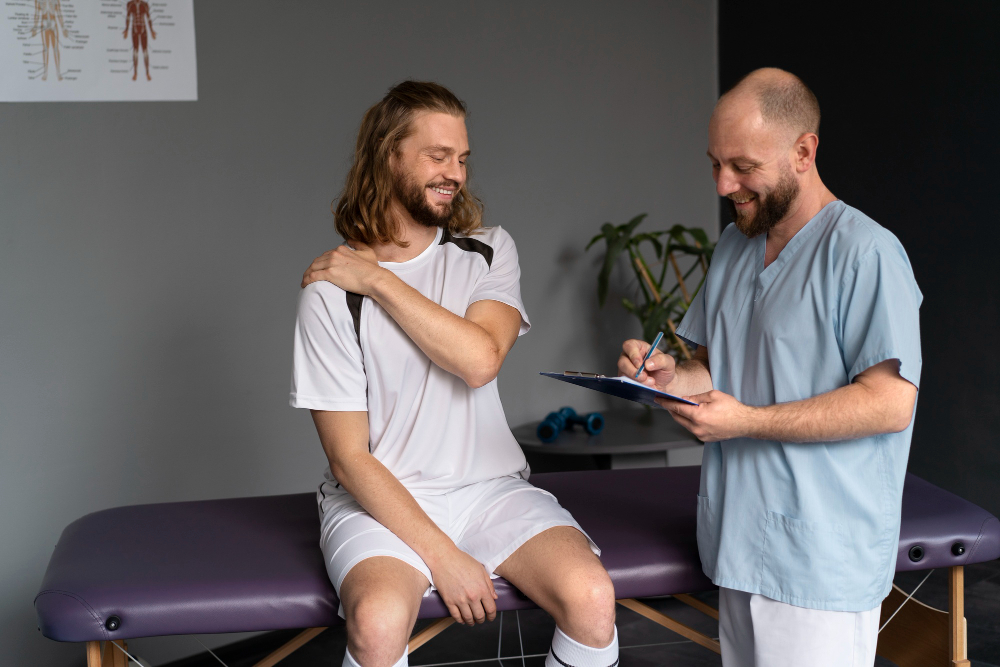
Bankart repair refers to a surgical procedure aimed at addressing shoulder instability by repairing a specific type of injury. The Bankart lesion typically involves damage to the labrum, a cartilaginous structure in the shoulder joint. The labrum helps stabilize the shoulder, and when it is torn or detached, it can lead to recurrent dislocations.
Recovery from a Bankart repair involves a comprehensive rehabilitation program, focusing on exercises to strengthen the shoulder muscles and restore flexibility and stability. This postoperative care aims to facilitate the healing process, prevent complications, and optimize the overall function of the shoulder joint. The ultimate goal is to ensure individuals regain full shoulder function, reducing the risk of instability and supporting a return to regular activities.
Shoulder stabilization procedures, crucial for addressing conditions of shoulder instability, encompass intricate surgical techniques aimed at restoring the structural integrity of the shoulder joint. One common method is the Bankart repair, typically performed through arthroscopy. In this procedure, small incisions are made around the shoulder, allowing the insertion of an arthroscope equipped with a camera to visualize the joint. The torn labrum, a vital cartilaginous structure, is meticulously reattached to its original position using sutures or anchors. This meticulous process effectively repairs the Bankart lesion, restoring stability to the shoulder joint.
Another significant approach to shoulder stabilization is the Latarjet procedure. This technique involves a bone transfer, often from the coracoid process, to the front of the shoulder socket. This transfer provides additional stability to the shoulder joint and can be performed either through an open incision or arthroscopically, depending on the specific characteristics of the case.
Following shoulder stabilization surgery, a comprehensive rehabilitation program is integral to the recovery process. Physical therapy plays a crucial role, assisting patients in regaining strength and flexibility. The goal is to ensure optimal recovery, restoring shoulder function and preventing further instances of instability. The choice between these procedures is carefully tailored to individual cases, considering factors such as the nature of the instability, the patient's age, and the surgeon's expertise. Consulting with an orthopedic surgeon is essential to determine the most appropriate approach for each patient's unique circumstances.
Recovery following shoulder stabilization surgery is a crucial phase focused on the patient's well-being and successful rehabilitation. Postoperative care involves careful monitoring for potential complications and the initiation of pain management protocols. Immediate attention is given to detecting any signs of infection at the surgical site. To prevent complications such as blood clots, patients are encouraged to engage in gentle movements. This initial care phase lays the foundation for subsequent rehabilitation, where physical therapy plays a key role. The rehabilitation program is tailored to restore shoulder mobility, strengthen the surrounding muscles, and enhance overall functionality. As patients progress, a gradual return to normal activities is guided by orthopedic professionals to ensure effective healing and minimize the risk of re-injury.