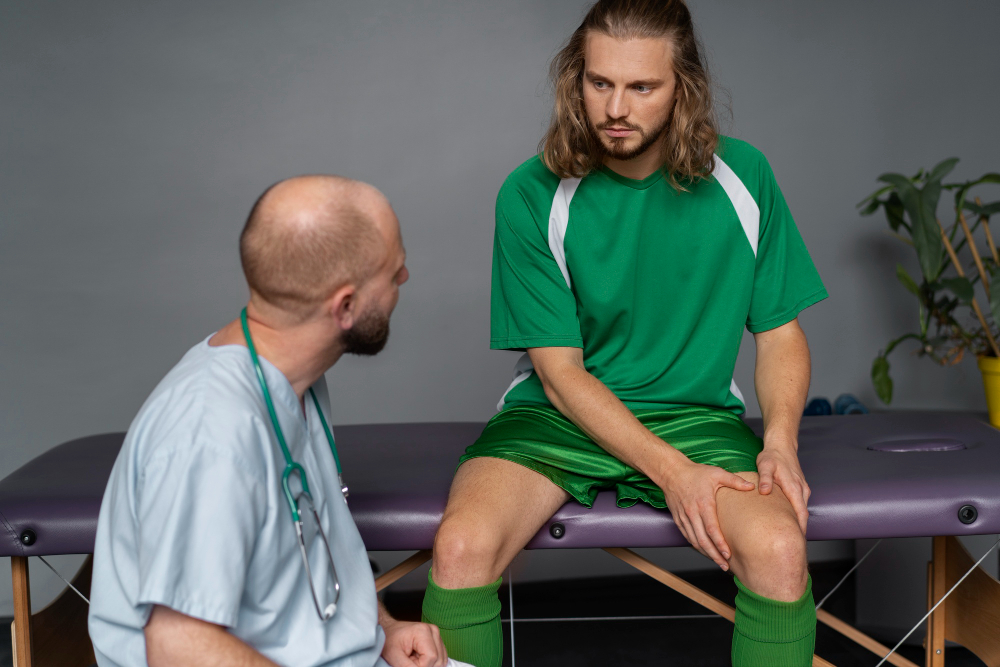
ACL stands for Anterior Cruciate Ligament. It is one of the major ligaments in the knee, connecting the femur (thighbone) to the tibia (shinbone). The ACL plays a crucial role in providing stability to the knee joint and controlling its forward and rotational movements. This ligament is essential for various activities involving the knee, such as running, jumping, and changing direction.
Rehabilitation is a crucial aspect of recovering from an ACL injury or surgery, involving exercises to strengthen the muscles around the knee and restore flexibility and stability. The goal of treatment is to help individuals regain full function and prevent long-term complications, such as instability or early joint degeneration.
ACL (Anterior Cruciate Ligament) reconstruction surgery is a meticulous procedure designed to address injuries to the crucial ligament in the knee. The process begins with a comprehensive preoperative evaluation, encompassing physical examinations, medical history reviews, and imaging studies to assess the extent of the ACL injury. This evaluation guides the surgeon in planning the surgical approach and determining the most suitable graft source for the reconstruction.
The surgery itself is conducted under anesthesia, with the choice of either general or regional anesthesia depending on the patient's preferences and health. A minimally invasive approach is adopted through arthroscopy, where small incisions are made around the knee, and an arthroscope equipped with a camera is used to visualize the interior of the joint. The damaged ACL is carefully removed using arthroscopic instruments, making way for the insertion of the chosen graft. This graft, sourced either from the patient (autograft) or a donor (allograft), is meticulously threaded through bone tunnels in the tibia and femur. The surgeon secures the graft in place using screws, buttons, or other fixation devices, aiming to replicate the natural position and function of the original ACL.
Postoperative care is a critical phase, involving pain management, monitoring for complications, and the initiation of a comprehensive rehabilitation program. Physical therapy plays a pivotal role in this phase, focusing on gradually restoring strength, range of motion, and stability in the knee. The final phase of recovery involves a gradual return to activities and sports, carefully guided by the orthopedic surgeon and physical therapist to ensure the knee has healed effectively, and to minimize the risk of re-injury. Overall, the success of ACL reconstruction hinges on factors such as graft selection, surgical technique, and diligent adherence to the rehabilitation plan. Patients collaborate closely with their healthcare team to optimize their recovery and achieve the best possible outcomes.
Recovery following ACL (Anterior Cruciate Ligament) surgery is a structured process aimed at ensuring the patient's well-being and successful rehabilitation. In the postoperative phase, close monitoring and early intervention are crucial to address potential complications. Patients are carefully observed in a designated recovery area, with pain management protocols initiated to alleviate discomfort. To prevent blood clots, gentle movements like flexing toes and ankles are encouraged. This initial postoperative care sets the foundation for subsequent rehabilitation phases. Physical therapy is integral to the comprehensive recovery journey, focusing on restoring joint mobility, strengthening surrounding muscles, and enhancing overall functionality. Skilled therapists guide patients through tailored exercises, including range of motion activities and gait training, gradually promoting increased independence. The personalized physical therapy program is instrumental in helping patients regain confidence in their mobility and fostering optimal outcomes in the postoperative period.